Madan Lal Dhingra

The London Files — Contents

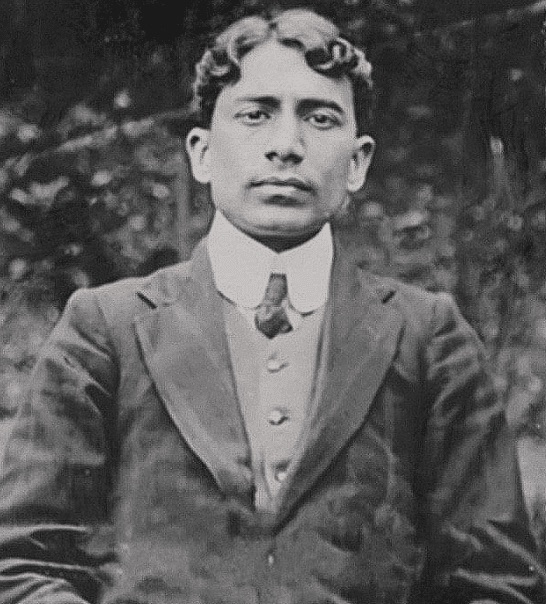
Photographic portrait of Madan Lal Dhingra as a young man, seated, wearing a dark jacket, waistcoat and high collar.
Plate 01 · Portrait

The photograph by which Dhingra is most often recognised. Photographer and exact date unrecorded in the sources consulted; the image is reproduced from a public-domain print.

The London Files · A historical archive

Madan LalDhingra

London • India House • 1909

A historical account of a revolutionary life — assembled from what is documented, marked where it is disputed, and honest about what the record does not tell us.

See the archive
Archive 01 London · 1906 Archive 02 India House · 1907 Archive 03 Imperial Institute · 1909 Archive 04 Trial · 1909 Archive 05 Memory

Chronology strip — dates compiled by this archive. These are not reproductions of historical headlines.

18 Sep 1883 Born at Amritsar, Punjab 1 Jul 1905 India House opens at 65 Cromwell Avenue, Highgate 1904 Leaves Government College, Lahore 1906 Sails for England; enrols at University College London 1 Jul 1909 Imperial Institute, South Kensington 5 Jul 1909 Caxton Hall meeting of condemnation 23 Jul 1909 Tried at the Old Bailey 17 Aug 1909 Executed at Pentonville Prison, aged 25 13 Dec 1976 Remains repatriated to India 1992 Commemorative postage stamp issued in India

File 00 · The question this archive asks

What changes
a student into
a revolutionary?

There is a tidy version of this story in which one insult, one speech or one meeting turns a quiet engineering student into an assassin. The historical record does not support it.

Madan Lal Dhingra was twenty-three when he arrived in London in 1906 and twenty-five when he was hanged in August 1909. What happened in between has to be read across several layers at once: a wealthy, English-educated Punjabi household that had prospered under British rule; a colonial school and college system that trained Indians for service and expected loyalty in return; a political generation formed by the partition of Bengal in 1905; the particular experience of being an Indian student in Edwardian Britain; and a small, intense expatriate network in north London that argued openly for revolution.

None of these on its own explains 1 July 1909. Together they describe the world in which his decision became thinkable to him. This archive works through them in order.

Dhingra's father, Dr Ditta Mal Dhingra, was a civil surgeon — a senior post inside the colonial medical service. All seven sons of the household studied abroad. The family's standing was built on the very administration his son would later attack, and after 1909 the family publicly disowned him.

Lord Curzon's division of Bengal in 1905 provoked the Swadeshi movement, mass boycott of British goods, and the sharpest crisis of legitimacy the Raj had yet faced. It radicalised a whole political generation and split the Indian National Congress at Surat in 1907 into “moderate” and “extremist” wings.

By the 1900s several hundred Indian students were reading law, medicine and engineering in Britain. Most were not revolutionaries; many entered the Indian Civil Service or the professions. But the same student world produced boarding houses, debating societies and journals where the legitimacy of British rule could be argued about far more freely than in India.

Sir William Hutt Curzon Wyllie was political aide-de-camp to the Secretary of State for India. Part of his work was keeping watch on Indian students in Britain and reporting on their political associations. That role, rather than any personal encounter, is what made him a target in the eyes of the India House circle.

File 01–03

Three worlds

Dhingra moved between three settings in nine years. Each one is a separate file in this archive.

File 01

Amritsar

1883 – 1906

A prosperous Khatri household inside the colonial professional class: a civil surgeon father, an English-medium education, and an expectation of a respectable career in service of the Raj. The record of his childhood is thin, and this archive does not fill the gap with invention.

What is documented is a break — a student protest at Government College, Lahore in 1904, a refusal to apologise, and several years of ordinary, unremarkable work before he left India.
File 02

London

1906 – 1909

He arrived in 1906 to read mechanical engineering at University College London. The city gave him two things India could not: a printing press beyond the reach of Indian sedition law, and daily proximity to Indians from every province arguing about the same question.

It also gave him the everyday condition of being a colonial subject inside the imperial capital — a status that was legally British and socially something else.

File 03

India House

1905 – 1910

A student hostel at 65 Cromwell Avenue, Highgate, opened on 1 July 1905 under the patronage of Shyamji Krishna Varma. It housed the Indian Home Rule Society, the journal The Indian Sociologist, and from 1906 the young V. D. Savarkar.

Not everyone who passed through it agreed with everyone else. Treating the house as a single mind is one of the commonest errors made about this story.

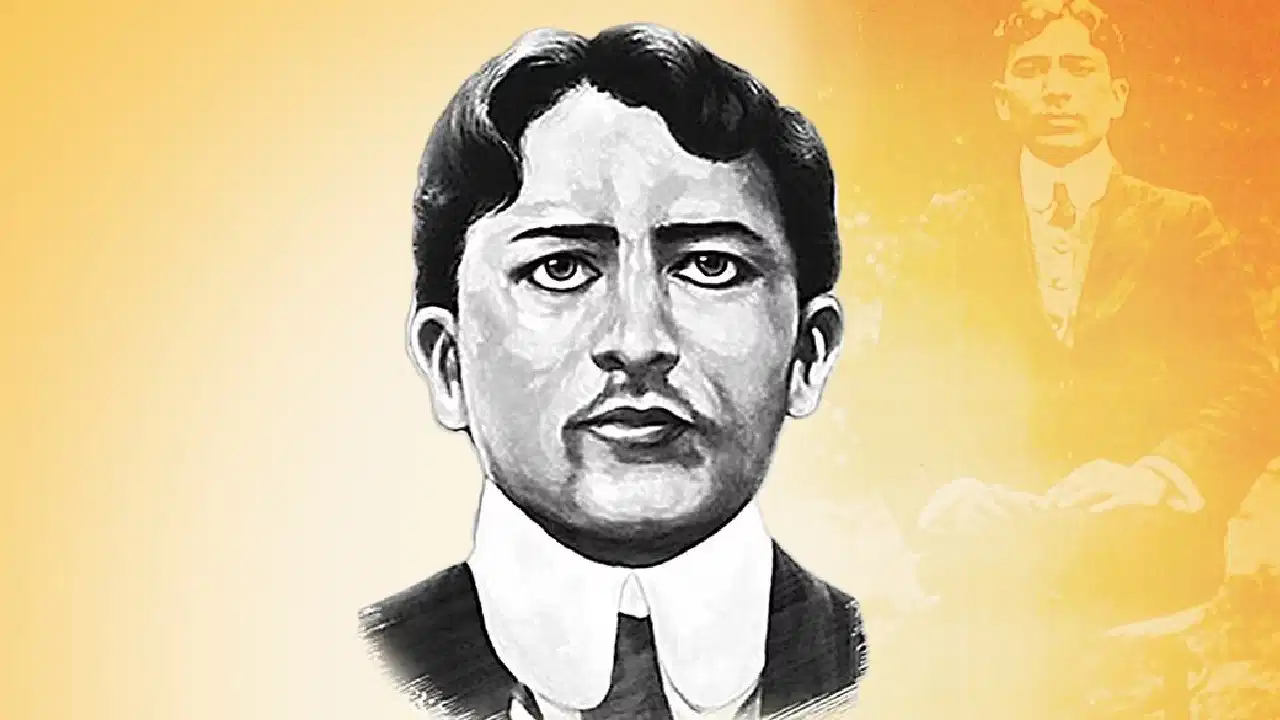
Modern illustrated portrait of Madan Lal Dhingra, drawn from the surviving photograph, with the full seated photograph faintly reproduced behind it.
Plate 02 · Modern illustration

A present-day drawing worked up from the one surviving photograph. It is an interpretation, not a historical image — and it is roughly how most people first meet him.

A note on the face

A portrait reproduced more often than it is read

Almost every printed and painted likeness of Dhingra — the 1992 postage stamp, the garlanded portraits carried through Amritsar each August, the illustration beside this note — descends from a single photograph of a young man in a dark suit.

That is worth saying plainly at the start. The visual record of his life is one image. Everything else is later work by other hands, made for later purposes. This archive labels which is which on every page.

No photograph in this archive has been cropped through a face, and no historical image has been generated or altered. Where an image is a modern artwork, the caption says so.

File 05

The year
everything changed

On the evening of 1 July 1909, at the annual “At Home” gathering of the National Indian Association in the Imperial Institute at South Kensington, Dhingra shot and killed Sir William Hutt Curzon Wyllie. Dr Cawas Lalcaca, a Parsi physician who moved to intervene, was also shot and died. Dhingra was seized on the spot and made no attempt to escape.

This archive does not stage that evening as drama. Two men were killed; one of them had no part in the politics involved at all. What follows on the 1909 file is an account of the political situation that led there, what Dhingra said his reasons were, and what the killing actually produced — which was not what he predicted.

The eventAnnual “At Home”, National Indian Association
The placeImperial Institute, South Kensington, London
KilledSir William Hutt Curzon Wyllie, political aide-de-camp to the Secretary of State for India
Also killedDr Cawas Lalcaca, a Parsi doctor who tried to intervene

Open File 05 — 1909

How to read this archive

To understand Dhingra,
look beyond the act.

Ideas

What the India House circle actually argued, and where those arguments came from — Irish and Russian precedents, Mazzini, and a reading of Indian tradition made for political ends.

Context

Colonial rule was not a backdrop to this story; it was the subject of it. Famine, sedition prosecutions, deportations without trial and the partition of Bengal are part of the record, and so are the reforms of 1909.

Consequence

The assassination hardened surveillance of Indians in Britain, closed India House, isolated the revolutionaries politically, and made Dhingra a symbol whose meaning has been fought over ever since.

This site takes no position on whether Dhingra was right. It sets out what happened, distinguishes evidence from interpretation, and leaves the judgement to the reader.

Explore the archive